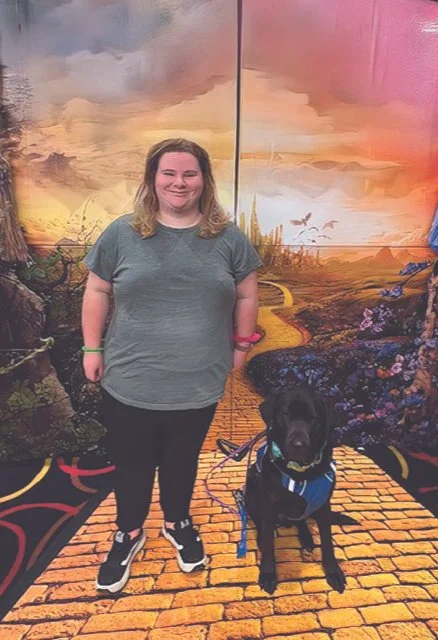
Izzy is a 27-year-old woman from Washington, DC, who is blind due to retinitis pigmentosa. The Eric Fund is purchasing life-changing assistive technology for Izzy that is not funded by insurance but will make a huge difference in her life as noted in her evaluation for these specific technologies. Izzy will receive Ray Ban Meta Smart Glasses with transition lenses that she says work “like another pair of eyes.” The glasses provide AI and real time audio descriptions of her environment and what she is seeing to help her more confidently navigate the community and will help her as she is currently seeking employment. Her sister, who is also blind, let her borrow her Meta Smart glasses once in a Starbuck’s and Izzy could read the overhead menu board for the first time on her own with the real time audio descriptions. Izzy will also receive a portable Braille display that can be used in conjunction with computers, tablets and cell phones and can connect to screen readers on various devices. While her guide dog, Boston, assists her with many things, the new assistive technology will help Izzy “see and read” what is in her immediate environment to help her be more independent in the community and better navigate future work environments.
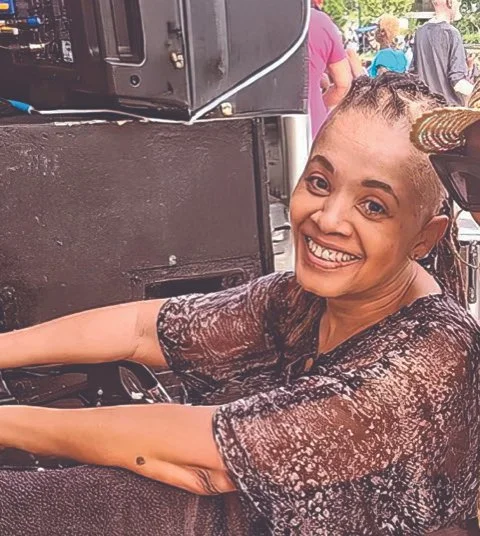
Shelia is a 59-year-old woman from Southern Maryland living with slow-progressing ALS. Shelia is a musician and was training to join the Sheriff ’s department when she received her ALS diagnosis, which has gradually limited her ability to walk and perform daily tasks. The Eric Fund helped Shelia partially purchase a Zeen, a mobility aid that enhances her ability to remain independent and navigate at home and in the community on her own as she does not yet require a power wheelchair. Shelia and her healthcare advocate had tried to get funding for this device which has been recommended for her, but they had been denied the funding. The Zeen gives Shelia the flexibility she needs to get around her home and in and out of a vehicle and out in the community. In addition, The Eric Fund has also been working with Shelia to provide vital adaptive equipment she needs to help her maintain her independence, including an adaptive bed to help her get in and out of bed on her own, adaptive shoes, and additional equipment to help her more easily get around in her home and the community. When Shelia learned The Eric Fund was able to help her with much of her needed assistive technology and equipment, she thanked the organization through tears. “It’s a Christmas miracle” she said. “It’s a wonderful life for real.”
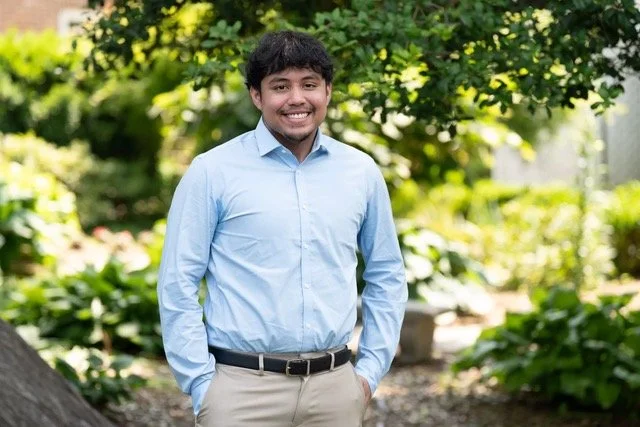
Derek is a 19-year-old young man with autism from Northern Virginia. A high school graduate, Derek has been involved with many recent programs to assist with his independence and employability including job training and peer mentoring programs. Derek also volunteers at a program for people with disabilities at his church where he helps with socialization and creative activities. He received a Macbook Air from The Eric Fund to assist with job training and applications as well as education to work toward his goal of becoming a Certified Nursing Assistant (CNA) working with people with disabilities. The computer will help Derek foster greater independence and self-sufficiency as he navigates this exciting next chapter of his life and his mission to help others.
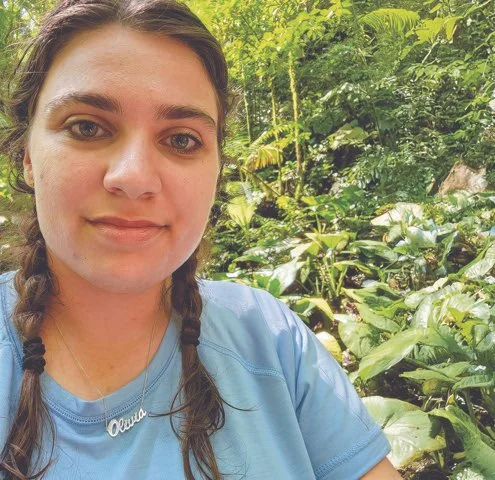
Olivia is a 27-year-old woman from Northern Virginia who loves helping others. Olivia lives with traumatic brain injury (TBI) resulting from a serious car accident when she was an infant. Her traumatic brain injury has resulted in developmental and functional challenges and medical issues. Olivia is working on completing her Associate’s degree and is looking at future employment options. The Eric Fund is purchasing a new HP laptop computer for Olivia to help her access her medical care as well as her online classes, collaborative classwork and employment opportunities. Her computer broke, and she has been relying on her shared family computer which has limited her flexibility and ability to use it when and as needed. She will also be receiving a printer as well as necessary software to complete her studies, assist with medical appointments, and help with her job search.
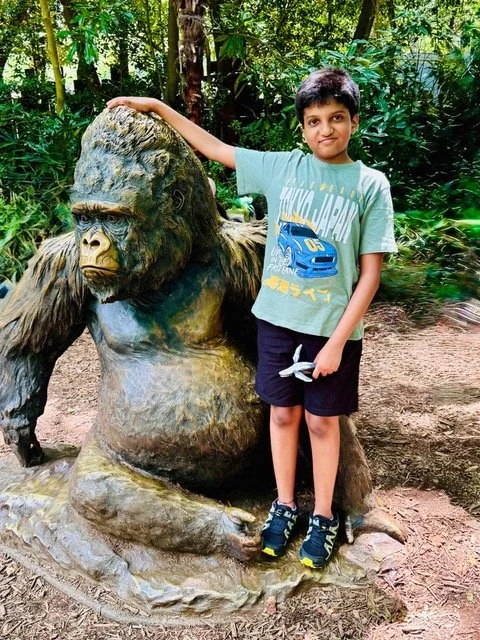
Manu is an 11-year-old boy from Southern Maryland with speech and language delays and an articulation disorder impacted by a former cleft palate that makes it hard for him to communicate verbally at home and at school. He is socially motivated to communicate, using gestures, his existing speech and other means when connecting with others. When Manu was evaluated and recommended for a Wego, an adaptive cellphone with an AAC (Augmentative and Alternative Communication) app that has no other cellphone capability (a feature that his parents want for him and his evaluation recommends), Manu made great progress with it. The small and portable nature of the device will allow Manu to easily carry it with him wherever he goes and interact verbally with anyone, anytime. Manu family’s insurance will only cover about 8% of the cost of the device, making the Wego financially out of reach until Manu was selected as a 2025 Eric Fund awardee. With the new device, Manu will be able to express himself more effectively, thereby enhancing his communication, social development and interaction as well as his confidence, overall self-esteem and independence. Manu can also use the device to communicate and learn more about his favorite animal, the humpback whale.